
The 49th Annual Lugar Symposium Continues a Legacy of Leadership at UIndy
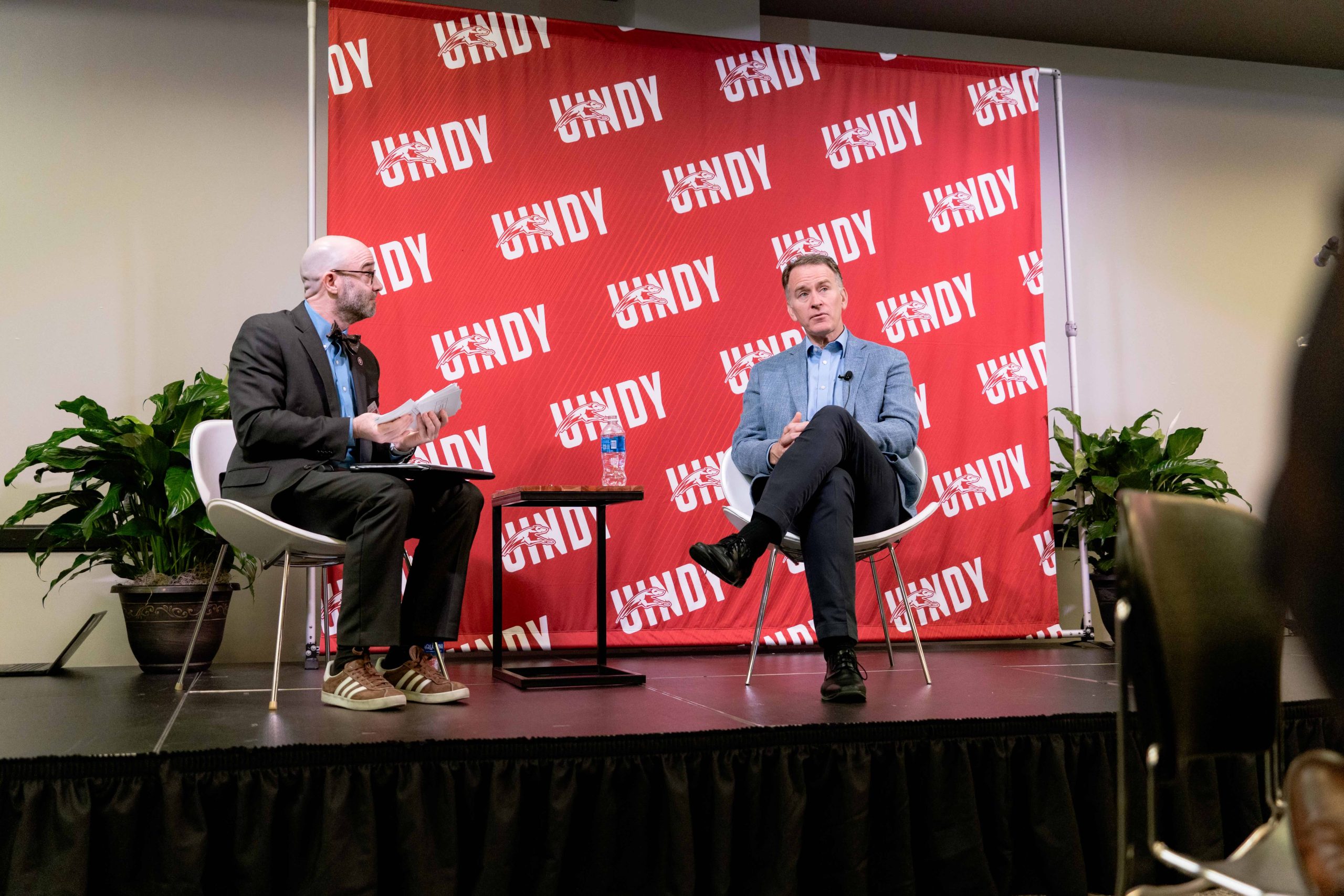
The University of Indianapolis welcomed students from more than 60 Indiana high schools for the 49th Annual Richard G. Lugar Symposium for Tomorrow’s Leaders, hosted by the Richard G. Lugar Academy. The daylong event brought together some of the state’s most engaged young leaders to explore current events, national politics, and pressing issues facing communities in Indiana and beyond.
Established to introduce high-achieving students to complex global and civic challenges, the Lugar Symposium reflects the enduring legacy of former Indiana Senator Richard G. Lugar, whose lifelong commitment to public service, diplomacy, and education continues to shape civic leadership in Indiana. Lugar also served as a distinguished trustee and political science professor at UIndy.This year’s keynote address was delivered by journalist, author, and National Public Radio’sMorning Edition host Steve Inskeep. In his remarks, Inskeep addressed the challenges facing citizens in today’s divisive political landscape, highlighted the role of journalism in navigating an increasingly complex information environment, and encouraged students to remain curious, informed, and engaged.
Following the keynote, students participated in a series of breakout sessions led by faculty from the UIndy Department of History and Political Science:
- In “End of the American-made International System? Great Power Politics in 2026,” Dr. Milind Thakar, professor of international relations, explored how the United States helped create a global system of alliances and institutions that undergirded pax Americana – the age dominated by the US and its allies during which free trade and democratization spread worldwide – and how that system now appears to be ending. Dr. Thakar led students through a discussion on what will follow and how it will impact the world and the United States.
- In “Through Their Eyes: Refugee Journey and Integration,” Dr. Jyotika Saksena, professor of international relations, and students explored Congolese refugee women’s journey from their home country to Indianapolis using photographs taken by the women themselves. The session focused on the social, economic, and cultural challenges refugees face as they try to adjust into their lives in America.
- In “The State of Indiana Politics in 2026,” Dr. Laura Merrifield Wilson, professor of political science, and students discussed important issues of property taxes, increasing healthcare and utility costs, declining college enrollment, and divisive data center construction as they relate to the current legislative session. The session covered the basics of state government and led into an analysis of the efforts of the Republican-led state legislature, the second year of Governor Mike Braun’s administration, and other key actors in Indiana politics, with a focus on what is at stake in the 2026 congressional midterm elections.
- In “Understanding the History of Disability Welfare and Work in Indiana,” Dr. Leah Luke, associate adjunct professor of history, and students examined historical and ongoing barriers to employment for disabled Hoosiers, including unfair stereotypes, transportation, and healthcare.
Participation in the Lugar Symposium also provides a tangible benefit for students considering UIndy. Each attendee is eligible to receive the Lugar Symposium Scholarship—$5,000 per year in renewable funding—in addition to any other financial or merit-based aid awarded by the University. Over the past four decades, more than 20,000 students have benefited from the symposium, further extending Senator Lugar’s impact on future generations of leaders.
“The Lugar Symposium reflects Senator Richard Lugar’s lifelong commitment to dialogue over division,” said UIndy President Dr. Tanuja Singh. “What stood out most was the level of thoughtfulness and engagement shown by the students, whose questions and curiosity demonstrated a genuine desire to listen, challenge ideas respectfully, and find common ground. Their commitment to thoughtful dialogue is a powerful reminder of the leadership our future demands.”