
The Stakes Are Real: UIndy Finance Students Learn to Manage an $800,000 Portfolio

Samuel Torres Ruiz ’27 (Finance) felt his palms sweat and his breathing grow heavier as he stood up to present to the classroom.
He was prepared for a lengthy Q&A session and a customary grilling from finance professor Dr. Matt Will. The stakes were high.
But this wasn’t a typical college presentation. Torres wasn’t simply reading from PowerPoint slides or summarizing a book. He had spent hours researching the company Salesforce, and now he had 10 minutes to present his findings and defend his recommendation to sell the stock.
And this wasn’t a hypothetical investment. Real money was on the line.
The UIndy Student Fund gives students the opportunity to research and invest in companies while managing an actual university portfolio. “It’s not a simulation, and it’s not a stock market game,” said Dr. Larry Belcher, professor of finance. “The students are fiduciaries, which means they are legally and ethically responsible for prudently managing someone else’s money.”
Torres successfully convinced his peers to sell the stock. “Dr. Will placed the order, and it was officially sold,” Torres said. “It was pretty exciting to see that we could actually have an impact on the university’s endowment.”
Ruiz started as a marketing major, but his love for number-crunching led him to finance. “I really enjoyed learning about stocks, researching companies, and understanding what drives their revenue.”
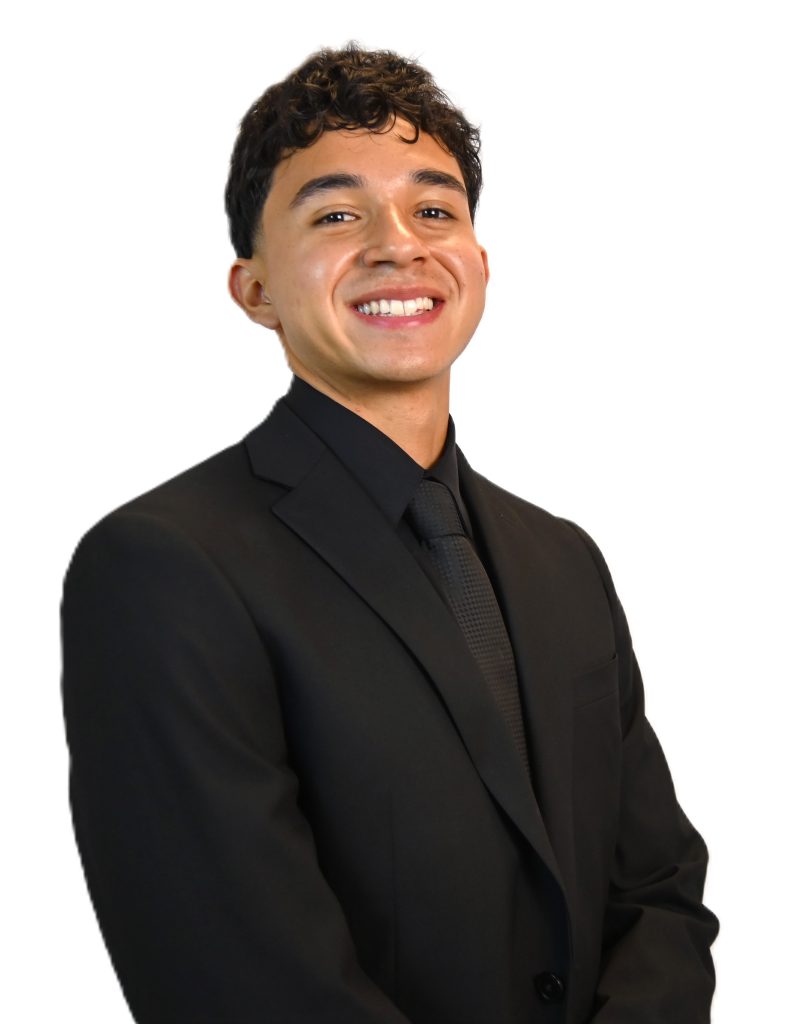
That interest eventually led him to the Student Investment Fund, a six-credit-hour elective that offered a more hands-on approach to finance. Torres knew the course would demand significant time and effort. “I expected a lot of work, and I definitely got it,” he said.
But the payoff was worthwhile. “Dr. Will always said it was the most important finance class you could take here,” added Torres. “He said students would gain more knowledge from this class than any other.” Even the first assignment gave Torres a preview of how much he would learn throughout the course.
When he was assigned to evaluate Salesforce, one of the fund’s investment holdings, he thought the process would be as simple as reviewing income statements. “I quickly learned that you can’t only look at the financials. Just because a company is making a lot of money doesn’t mean you should invest in it,” said Torres. “It’s more important to understand what the company does, what drives its revenue, what its risks are, and what markets it can tap into.”
The course not only changed Torres’s understanding of investing, but also challenged him to become a more confident researcher and presenter. In past presentations, Torres would often make his points on the spot, but in this environment, he needed to become an expert on Salesforce.
“This class felt like the highest-stakes class I’ve ever taken,” said Torres. “I really enjoyed the high-stakes environment because it pushed me to keep growing in my presentation and research skills.”
Torres is one of the many students who have benefited from this experience. Student investment funds are now a staple in many finance programs, with more than 700 programs in the United States, and others emerging in countries such as India and the United Kingdom.
Dr. Belcher explained that administrators have moved past their initial fear of allowing students to manage money. “In the beginning, it was considered a really radical idea,” said Belcher. “Now, it’s more like, ‘When are you going to start one? Why don’t you have one?’”
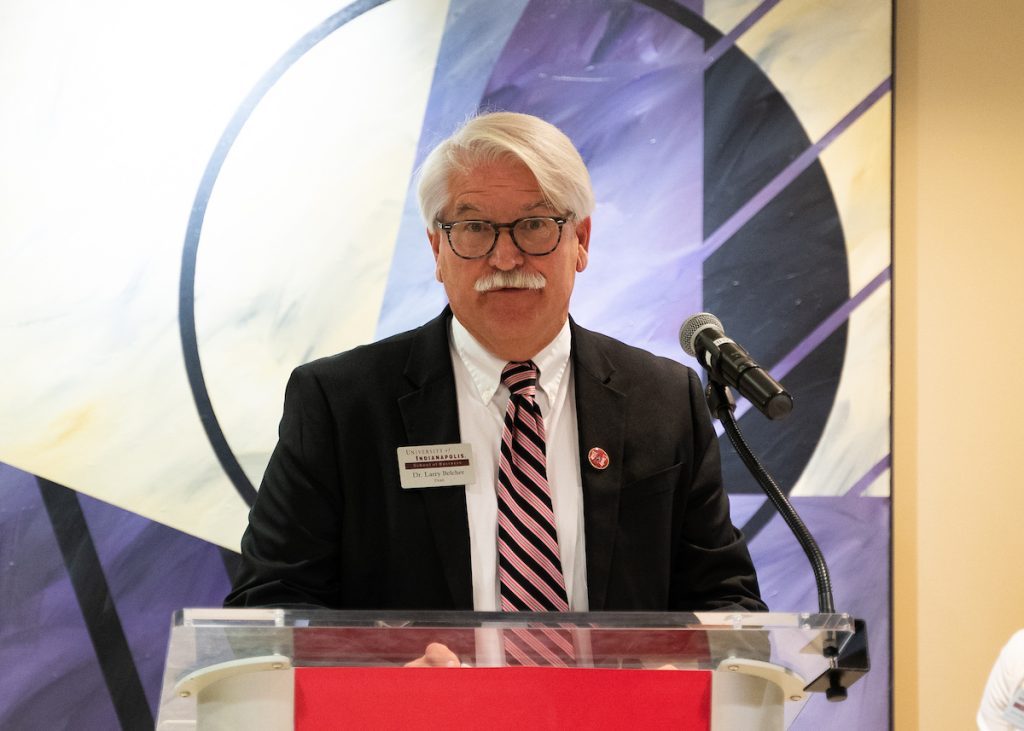
Few people have followed the growth of student-managed investment funds as closely as Belcher. He has been involved with the programs since 1990, helping universities launch, maintain, and evaluate their funds. His expertise was even a major selling point when he interviewed for the dean’s position at the UIndy School of Business, a position he held from 2015-2024.
That experience helped launch UIndy’s own Student Investment Fund, which Belcher helped establish in 2017. “They are one of the greatest experiential learning tools available to finance students because they get to manage money,” said Belcher.
What began with two $50,000 donations has since grown into a portfolio worth more than $800,000, an impressive figure that can give students an edge when interviewing for jobs. “Going into an interview and being able to say, ‘I managed nearly a million dollars for a school,’ is incredibly valuable,” said Torres.
The experience also helped Torres narrow down his career path. He spent the summer interning at JPMorgan in a sales role but hopes to move into something more research-focused, particularly equity research, the type of work he enjoyed doing in the Student Investment Fund.
The course was demanding, but Torres said the experience was worthwhile. Now, he’s trying to convince other students to enroll, just as Dr. Will once convinced him.
“It’s the class where I learned the most about finance,” he said. “If you’re looking for a competitive class where your classmates and professors will push you, it’s definitely well worth taking.”