
UIndy Course Brings Engineering to Life in Local Classrooms
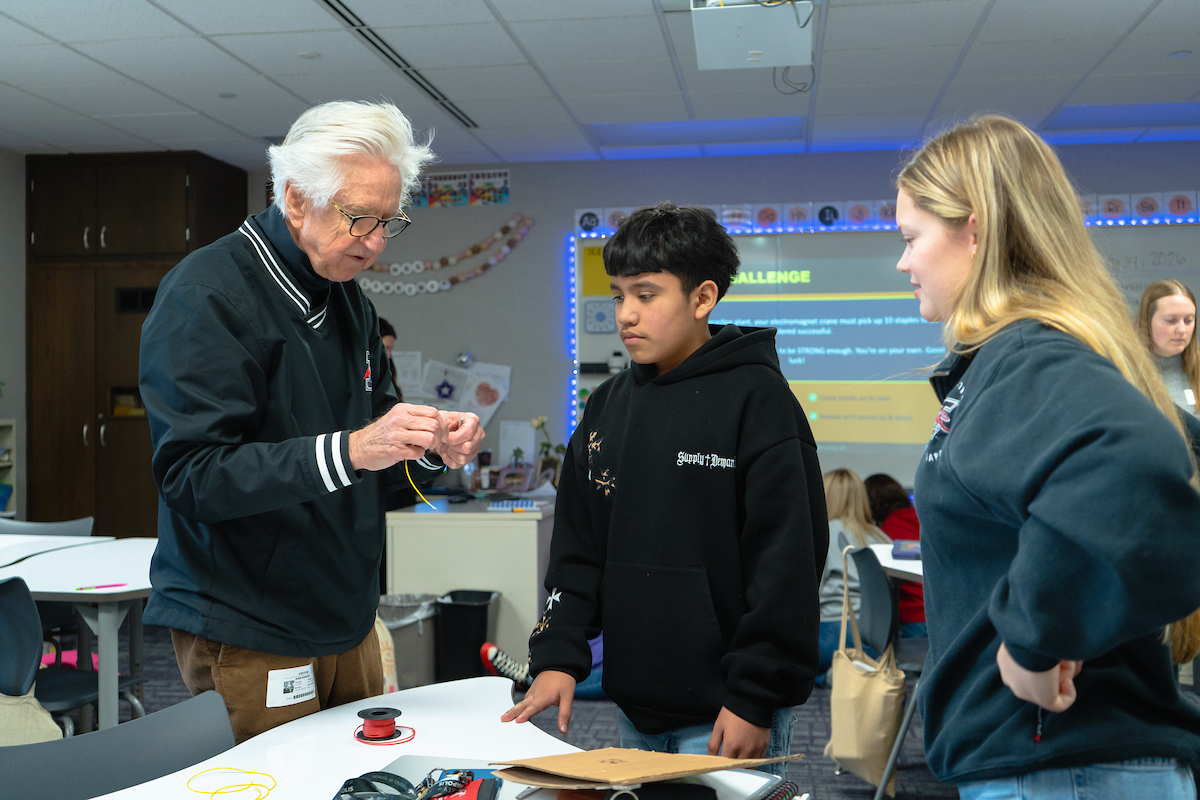
It’s a moment that happens far too often. Dr. John Somers, standing in front of a class, will ask, “How many of you have played with magnets before?”
To his surprise, out of 38 students, not a single hand is raised. Somers, UIndy’s director of graduate studies, calls it a national crisis.
“Students are not coming in with the math skills they need, and the lack of hands-on science experience is alarming,” he said.
That concern is what drives UIndy’s Introduction to Engineering for Education course, a collaboration between the School of Education and the R.B Annis School of Engineering that immerses future teachers in applied STEM learning.
Every Tuesday, Somers and his students head to local schools such as Beech Grove, Christel House and Stout Field Elementary to bring engineering into the classroom.
Projects are intentionally hands-on and interactive. “It’s not just about trying to get kids to become engineers,” said Somers. “It’s teaching them to think like an engineer and solve any problem.”
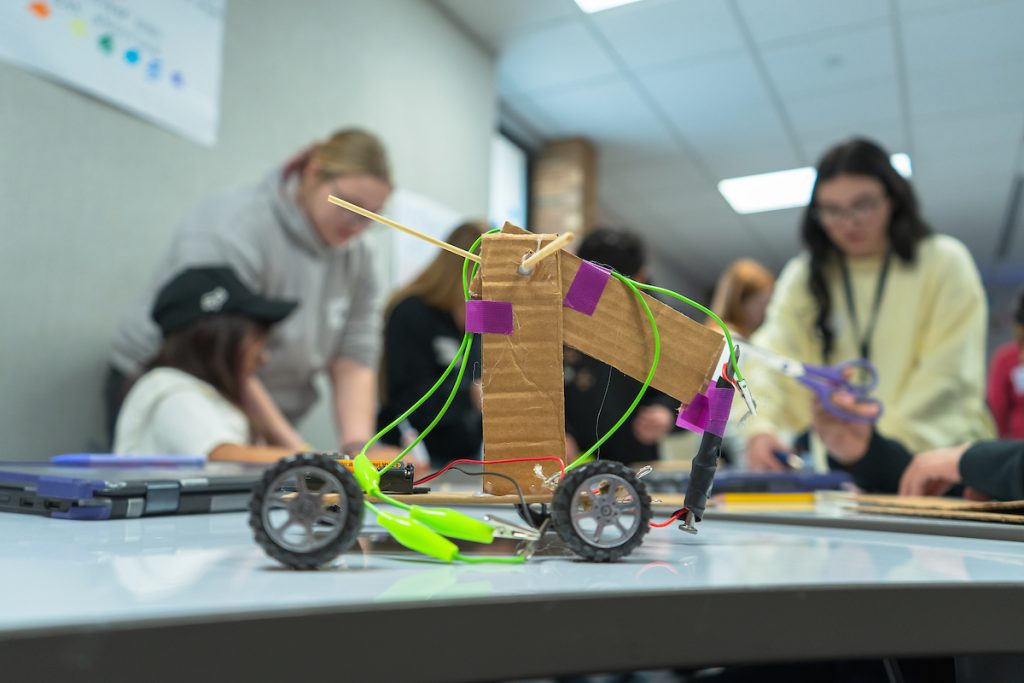
UIndy students guide elementary students through activities that blend creativity with technical skills, from using electromagnetic cranes to lift objects to designing LED safety vests that protect cyclists at intersections.
One memorable challenge had the kids design a small cardboard “doggy door” with magnets. The goal: the door opens as a toy dog approaches and automatically closes once the dog passes through, keeping “rats” out. It’s a fun yet challenging way to teach magnetism, forces, and the engineering design process.
One fourth grader stunned the classroom by completing the “doggy door” challenge with ease. “What? She figured that out? Our students were even struggling to do it,” said Somers. This challenge not only tested problem-solving skills but also highlighted the surprising creativity of the young learners.
“I love seeing their ideas come to life,” said Alannah Johnson ’28 (Elementary Education). “I love seeing them grow and evolve.”
UIndy students gain tangible experience with crafting lesson plans. “Sitting in classrooms for 12 years, they think they know what teaching looks like,” added Somers. “Things look a lot different when you move from sitting at a desk to becoming a teacher.”
The course also gives UIndy Elementary Education majors a foot in the door at local schools, functioning almost like a real-world job interview while allowing them to make a lasting impression on students.
“The schools love us. They want us to come back,” Somers said. At the end of each semester, K–12 students even create thank you cards to show their appreciation, a simple gesture that is deeply rewarding for the aspiring teachers.
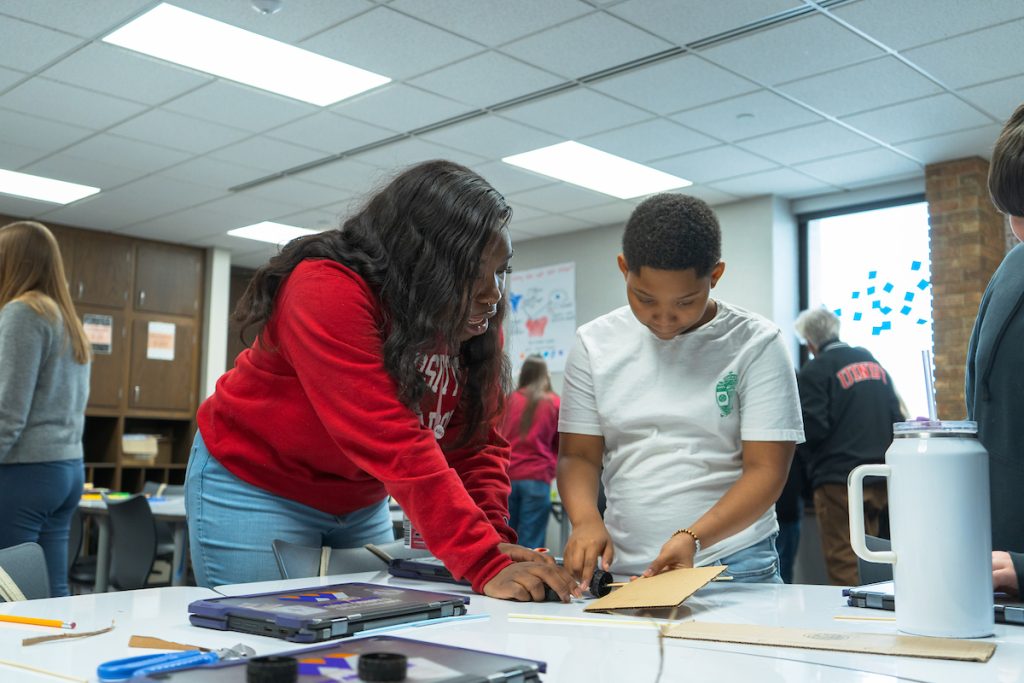
“As teachers, it is an honored tradition to teach and influence the generation that will someday look after us,” said Mason Young ’28 (Elementary Education). “Leaving a lasting impact on those who grace our classrooms means more than any riches or treasures.”
Programs like this are helping UIndy shape the next generation of problem solvers, so that next time Somers asks a class if they’ve played with magnets, dozens of eager hands will shoot into the air.