
A Small Spider Exposed a 60-Year-Old Error. A UIndy Professor and Student Fixed It
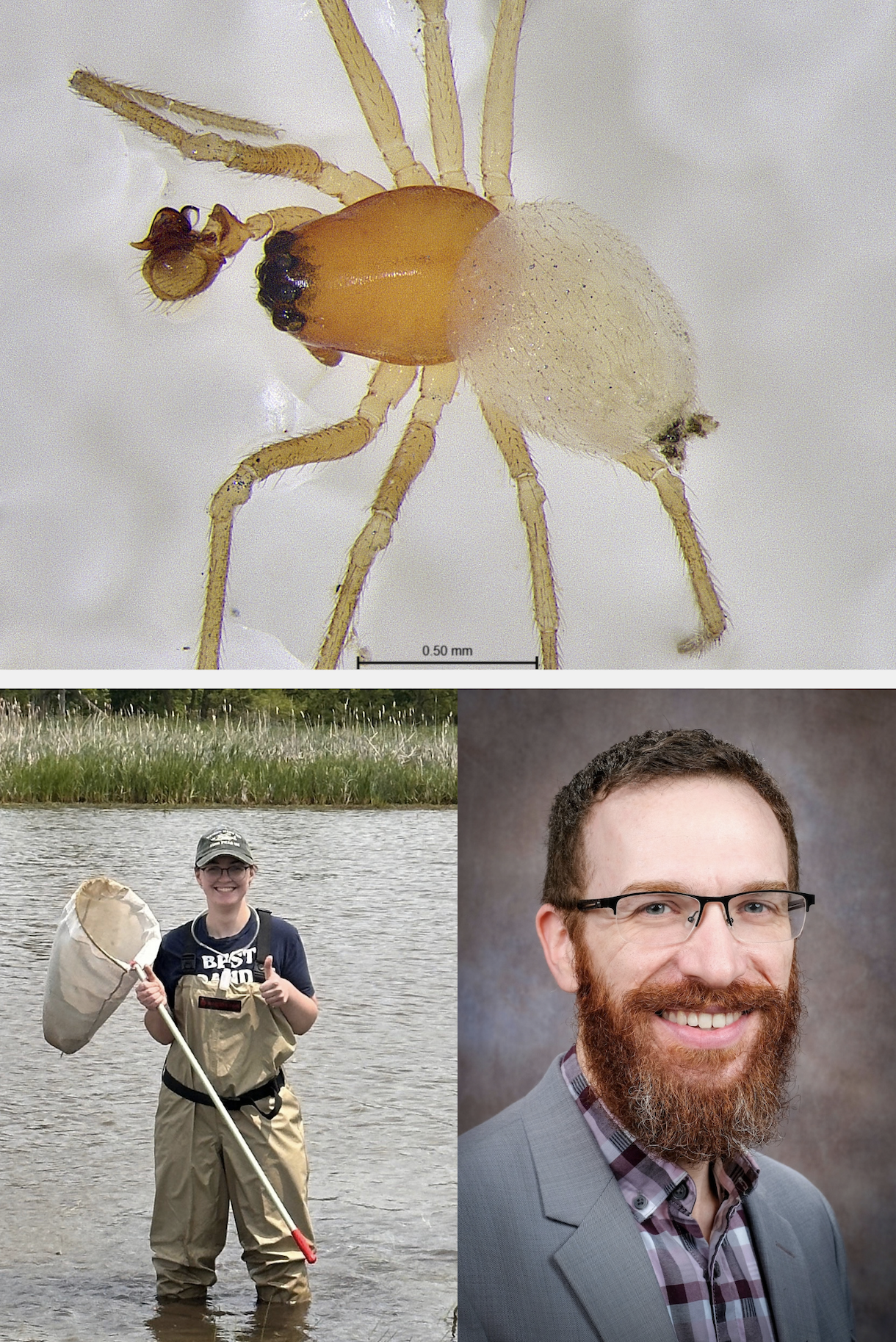
As a child, Taylor Stahl ’26 (Biology) wouldn’t go near a spider. She was terrified of them.
But now, not only does she light up when she sees them, but she also spends late nights in the lab studying them, sometimes staying until 10 p.m. “One of my friends who is horrified by bugs will say, ‘It’s okay, Taylor will be sad if I kill it,’” Stahl explained.
Her fear quickly turned into fascination, especially after she took an Introduction to Biology course with Dr. Marc Milne. In his 13 years at UIndy, Milne has met many students who are uneasy working with spiders at first, a hurdle that is easily cleared by a little exposure.
“I think it’s the realization that most of these spiders are harmless little critters that want nothing to do with you,” he said. “Put your hand next to any spider in North America, and the first thing it will do is run away. Once you see that behavior over and over, you realize, ‘What am I scared of?’”
Milne’s work with spiders extends beyond the classroom. He dedicates his time to searching for lost species that haven’t been seen for 10, 20, sometimes 100 years. While roaming through gardens, forests, and wooded areas, Milne routinely encountered the same tiny spider in unlikely places. Even stranger, he kept finding a male spider alongside it that, according to decades-old research, wasn’t her mate.
The spider, known as Ceratinopsis tybeensis, was no more than 1.5 millimeters in size and was known to Florida and Georgia. Milne, however, also found it in Indiana, Virginia, North Carolina, and a few other places up north.
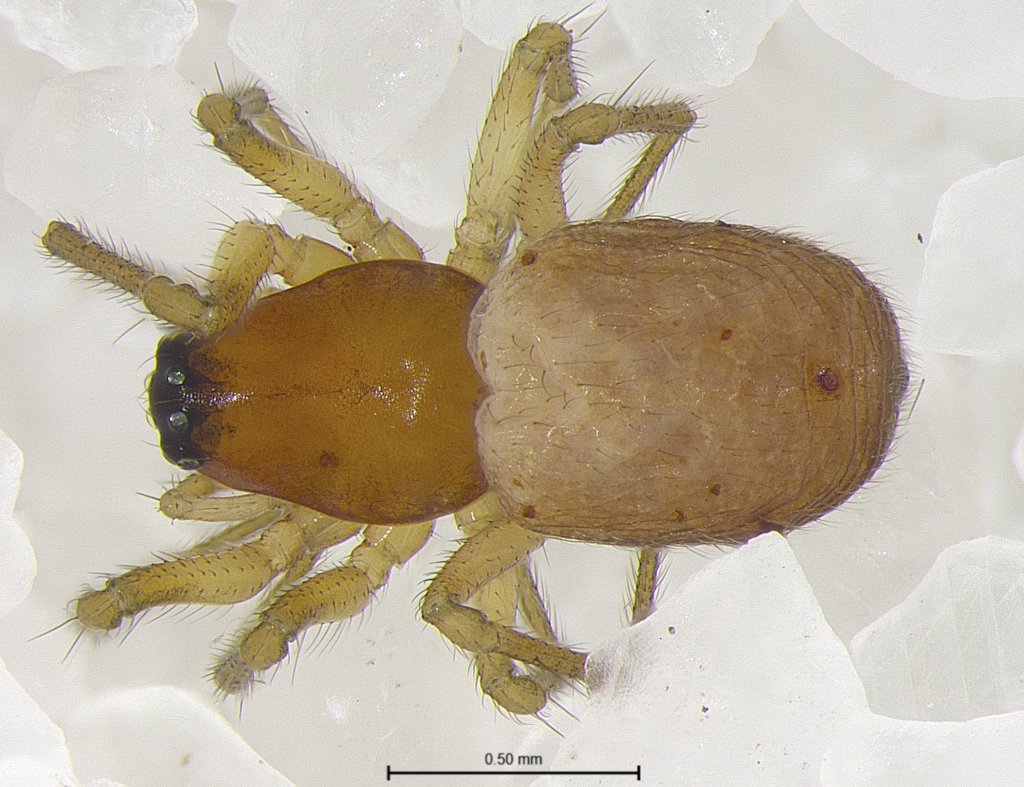
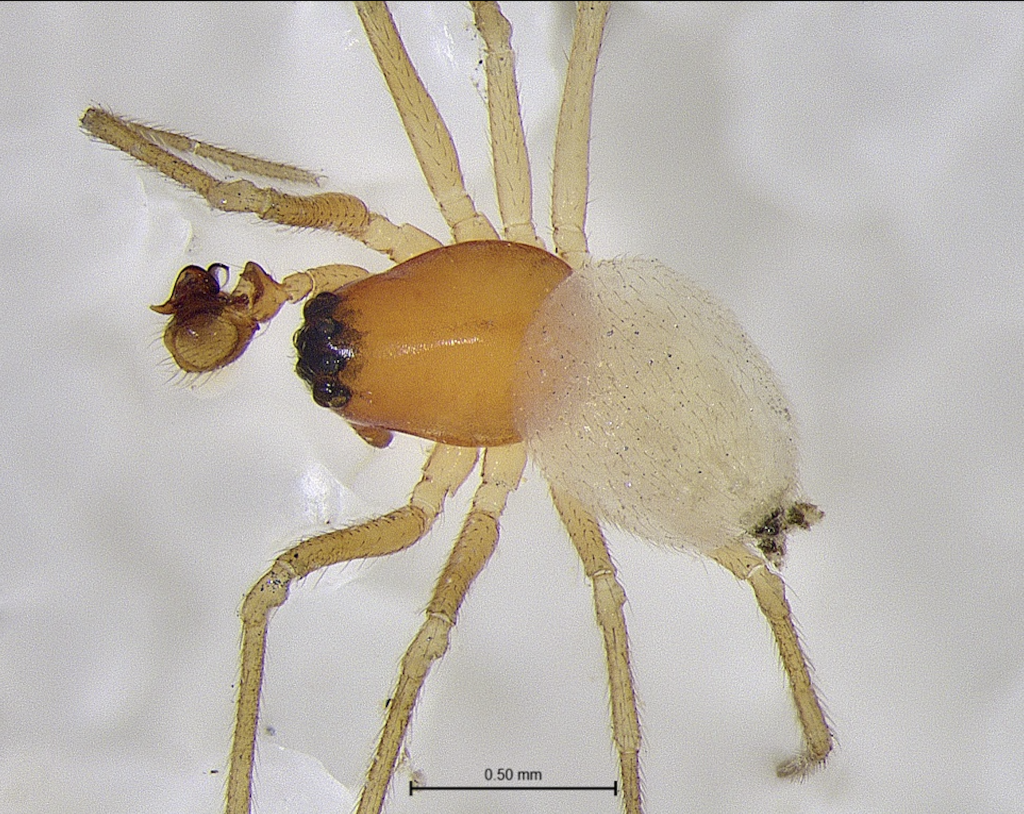
“I was finding the female and the male, but they don’t go together, right?” said Milne. “The male was undescribed—we had never seen it before. You look at the literature and it says the female is supposed to be with this other male that I was not collecting. So this was a very weird thing going on; I really didn’t know what was happening.”
Milne had an inkling that the original researcher had paired the female with the wrong male. To be sure, he recruited Stahl, now his most senior student, to run DNA tests.
“I can depend on her and trust her,” he added.
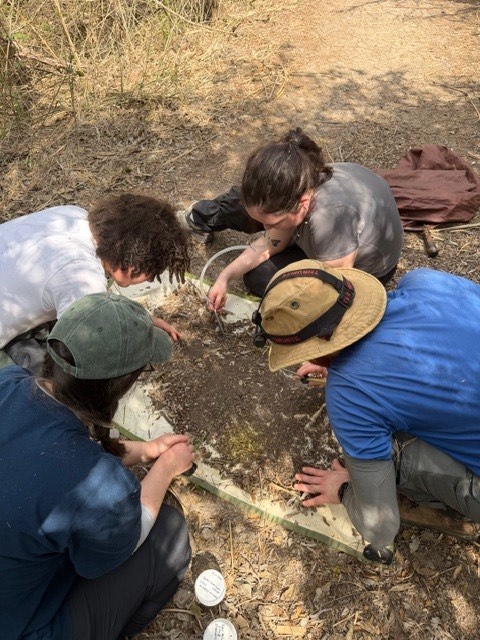
Rather than simply assisting with lab work, Stahl was handed the keys and performed her own DNA analysis in an attempt to correct decades of published scientific research. “UIndy is giving an experience to students that not many other institutions deliver—a transformational experience where they can do things that affect the real world and push the boundaries of science,” said Milne.
Stahl analyzed the spider’s mitochondrial CO1 gene, which is essentially a DNA barcode. “It can be used to identify a critter by its species because it’s that unique of a gene,” said Milne.
DNA testing proved Milne’s hypothesis correct. The male and female spiders they collected had the same DNA barcode. What had been seen as fact for decades was actually incorrect. “I’ve found that in the literature, sometimes this gets discovered but an error rarely gets made where they pair incorrect things together,” said Milne. “Usually researchers catch these errors.”
In an effort to “figure out the whole taxonomic mess and put it right”, as Milne put it, he and Stahl wrote a paper on their discovery, which went on to be published. They decided to submit it to the British journal “Arachnology”, which usually publishes smaller notes that are typically four to five pages in length and has a quick turnaround time. “For some journals, you submit something and wait six months for reviews, revisions, resubmissions, and printing. It can take years,” said Milne. “This took two months, which was really incredible.”
“Emotionally, it feels really cool,” said Stahl. “Not many undergrads are published authors, so it’s a significant accomplishment for me.”
The World Spider Catalog records every known spider species in the world, containing more than 54,000 species. When someone clicks on Ceratinopsis tybeensis, they’ll see Milne and Stahl’s paper — and the correction — for the whole world to see.
Something that was published in the 1960’s was treated as fact until two people said, “Wait, these two spiders don’t actually match.” The discovery may be seen as small, but it demonstrated a larger point Milne preaches to his students: There are still gaps in what scientists know about the natural world.
“There’s a misconception that everything’s been discovered and natural history isn’t useful,” said Milne. “If you talk to experts, they will tell you the knowledge gaps that exist so you can position your research to fill them.”
In this case, a creature smaller than a grain of rice exposed a gap in scientific knowledge, and a student who once wouldn’t touch a spider helped close it.